How American White Pelicans Prep Their Meals
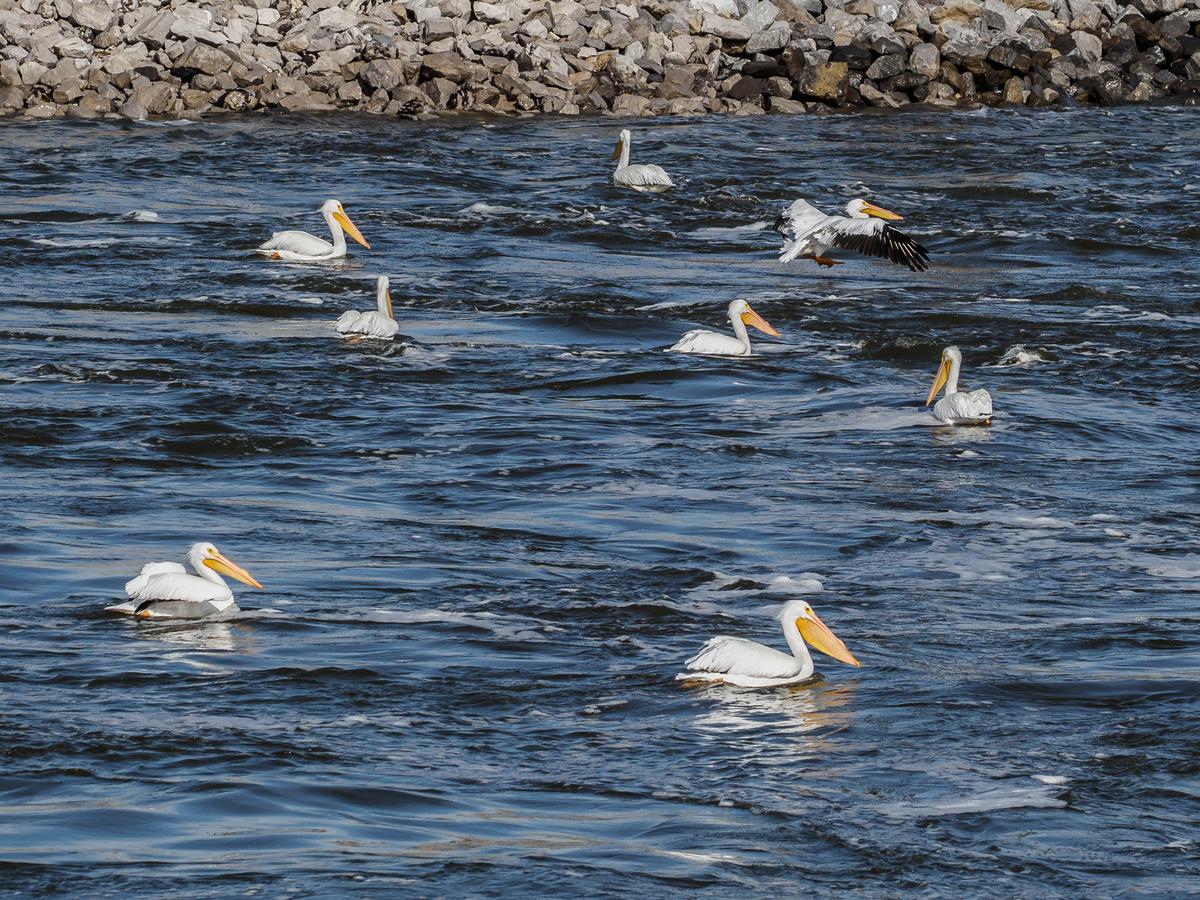
I took a short break from hospital duty today to go get some air and sun, since this will be the only day in the past or upcoming week where the temperature creeps above freezing. The migratory pelicans were out en force as well, forming their now-familiar armada on the lower Pearl.
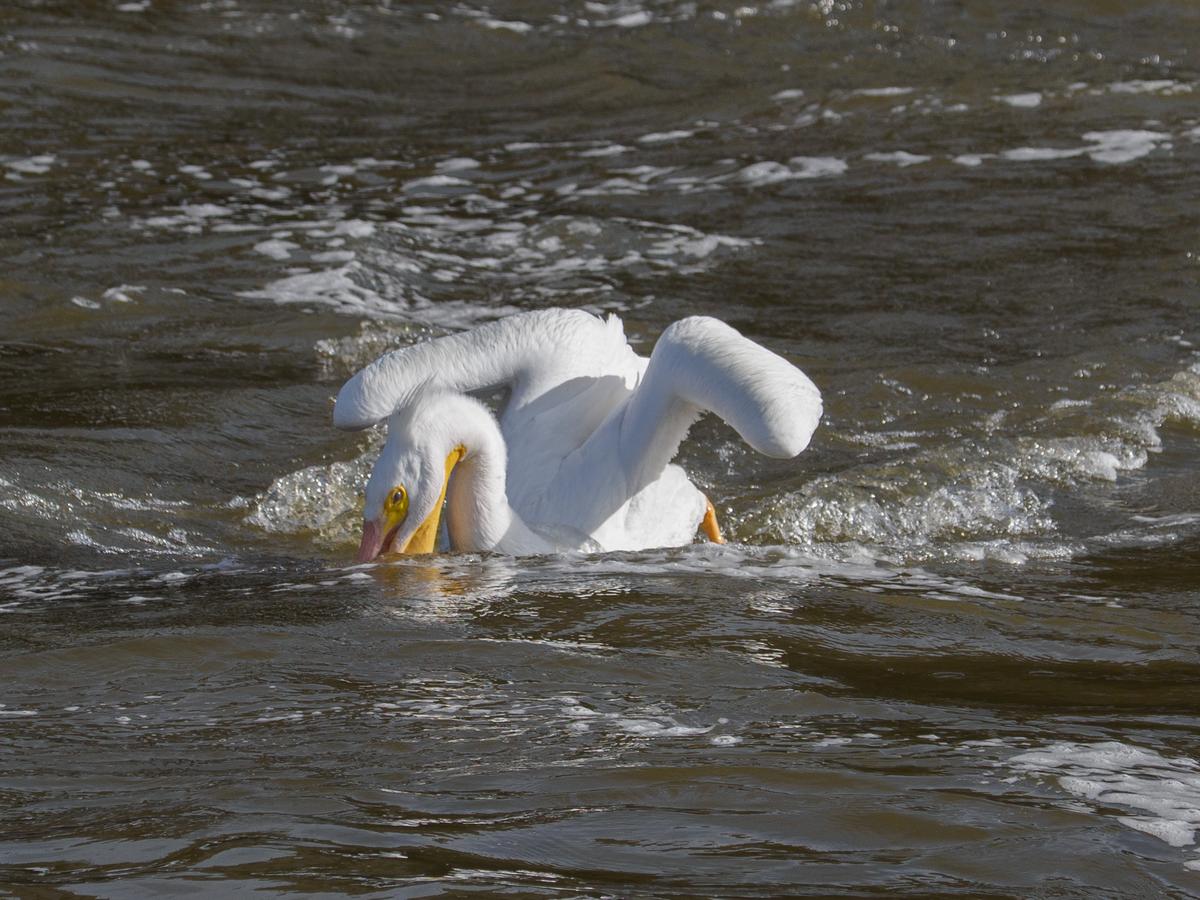
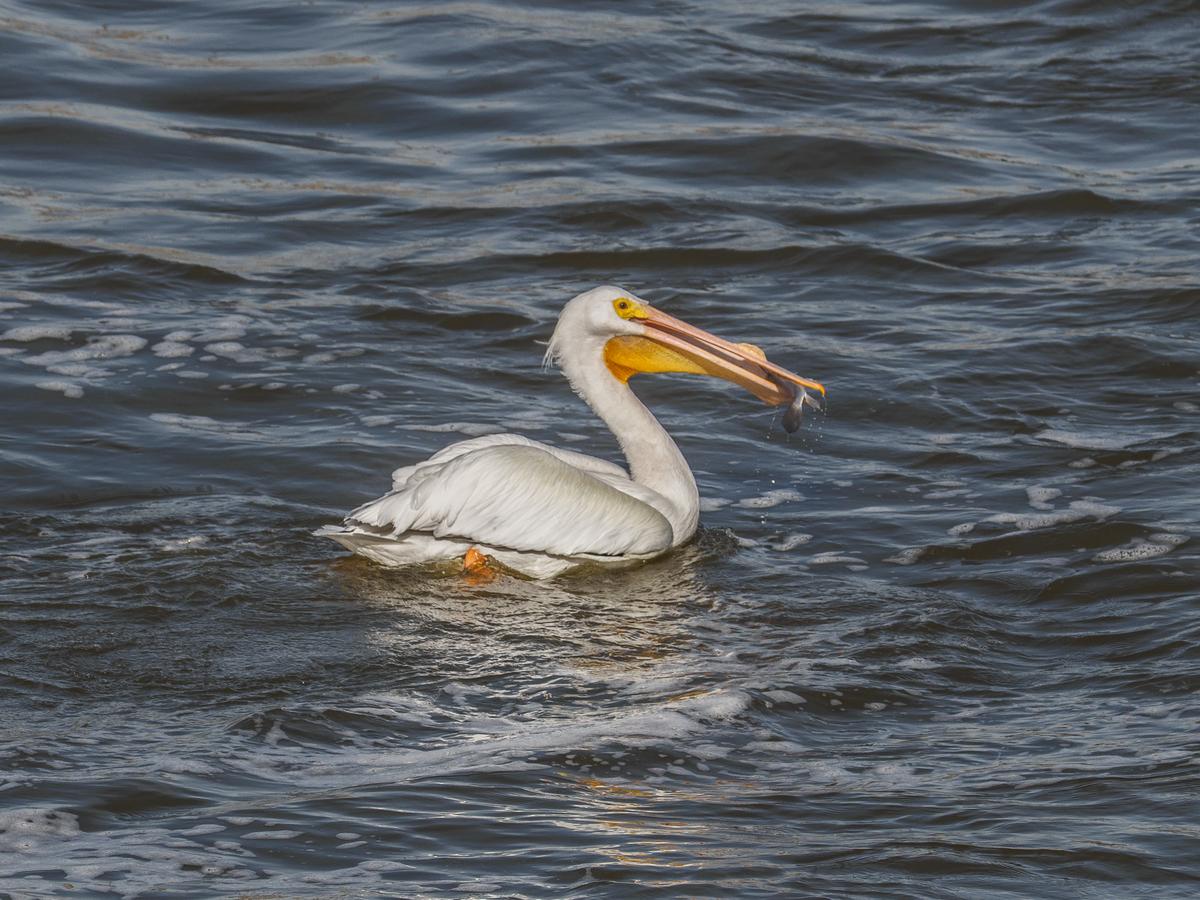
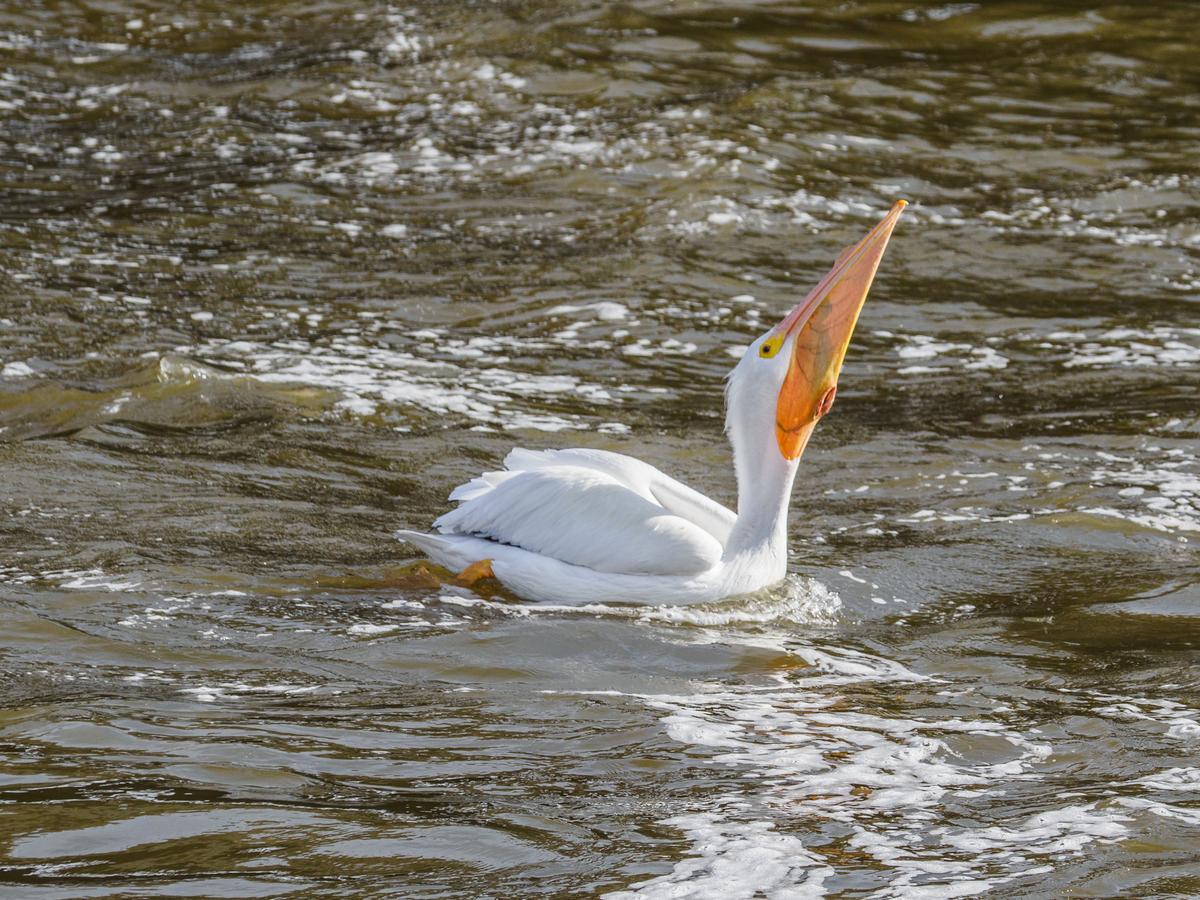
Here's how they work. They fly in from their winter retreat and set out a loose formation of circles on the river. Today there were about 100. They allow their circle to drift downriver about 100 yards or so, then they fly back upriver to their original positions. They fish as they drift. They gather in smaller groups of 4-6 then blend back into the larger group. They submerge, scoop up a fish, raise their huge bills to drain the excess water, then swallow whole. Their beaks are translucent and you can see the shape of the contents well enough to identify the kind of fish who's becoming lunch. They spend a good bit of their rest time grooming their feathers and performing maintenance on those complicated beaks. They are the second largest bird of North America (the condor is the largest), with a wingspan of about 10 feet, and a weight of 20-30 lbs. The lumps on some of their beaks mean they are shopping for a mate. They fall off after the eggs are laid.