• Members 1266 posts
    Jan. 9, 2026, 3:48 p.m.

    Question inspired by this article:

    petapixel.com/2026/01/08/the-photographers-guide-to-breaking-your-own-rules/

    There's lots of "rules" or conventions in photography.

    I always break the 'rule of thirds' which seems to address the placement of subjects in a frame other than dead-center.

    I prefer using the Golden Ratio for subject placement; for me, a thirds placement puts something a little too far from the middle of the frame.

    RawTherapee offers cropping guides for both thirds and Golden (which they call 'harmonic mean') ...

    Thirds
    thirds.JPG

    Golden
    golden.JPG

    The posted images are not cropped as such, they are screenshots of the same image showing the two different sets of guidelines.

    Generally for placement, I personally estimate where the centroid (center of area) is and place it that point. Calculating the centroid of an irregular, asymmetrical subject is beyond me but, for photographic purposes my mind works well enough.

    I'm interested to see if anyone regularly breaks a particular rule or even several in their own work.


    golden.JPG

    JPG, 477.7 KB, uploaded by xpatUSA on Jan. 9, 2026.

    thirds.JPG

    JPG, 441.7 KB, uploaded by xpatUSA on Jan. 9, 2026.

  • Members 2449 posts
    Jan. 9, 2026, 5:14 p.m.

    I used to use the "Golden Section" to compose. But I do not consciously use it or the rule of thirds anymore. I just try to frame and arrive at "what looks best".

  • Jan. 9, 2026, 5:19 p.m.

    I don't break any rules - actually I even don't know any rules :( :) I just adjust/crop/whatever images to my taste. I think I strive for visual balance - but this also is subjective.

  • Jan. 9, 2026, 5:54 p.m.

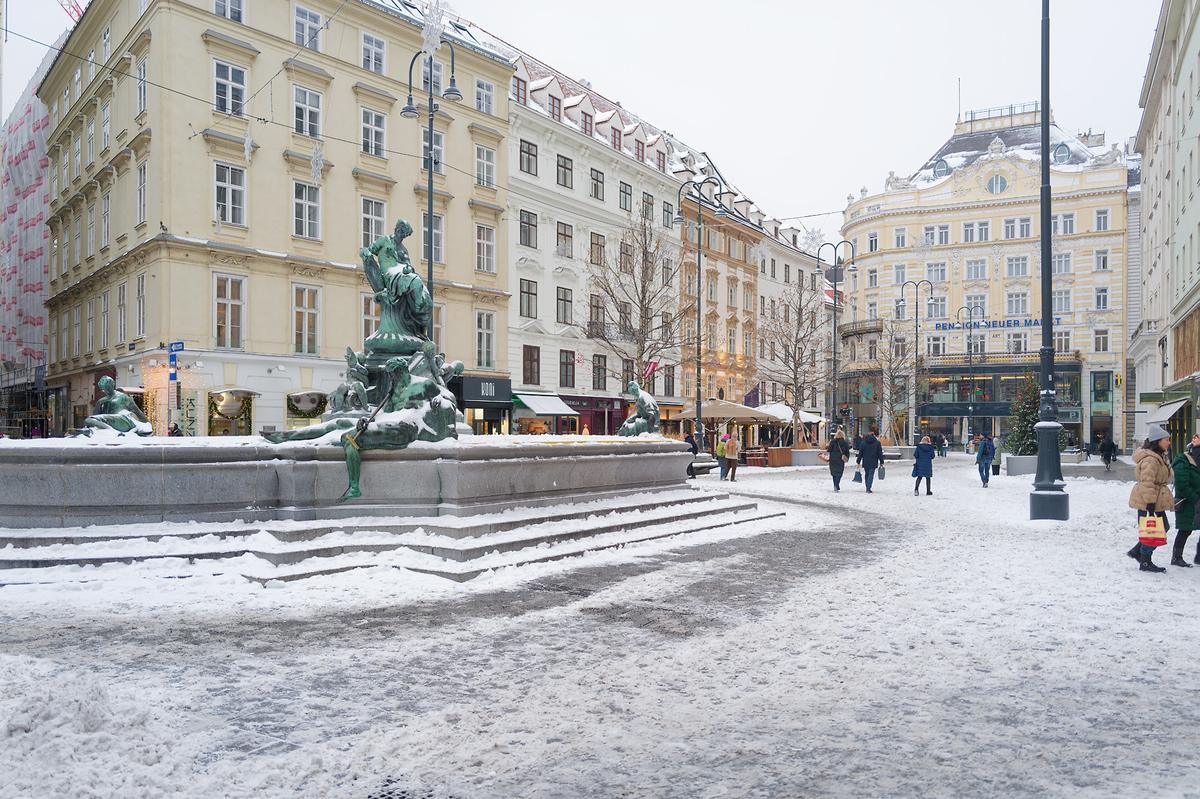
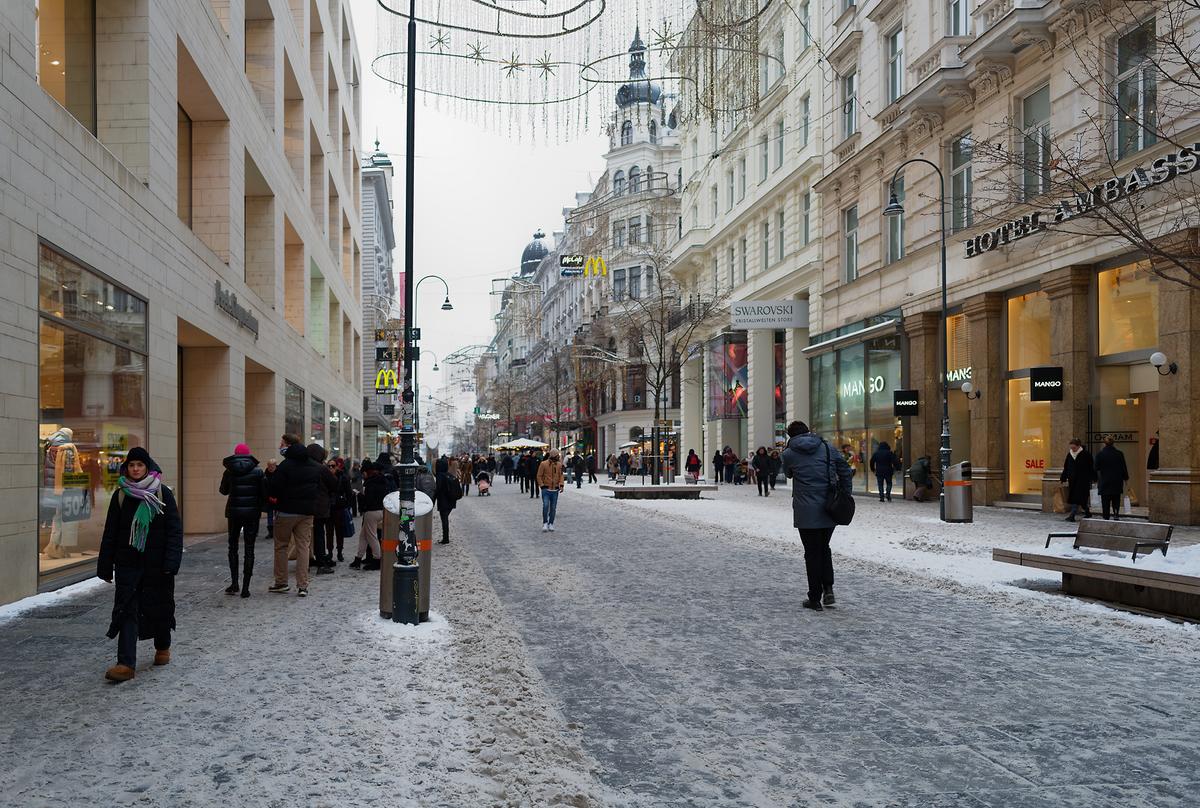
    I read the article, but it doesnt make any sense to me. I just take photos without any rules in mind, either to follow,or break. This probably explains why other people dont like them. Mostly I dont either, so I guess everyone is happy to the same degree. It snowed here for the first time in about 20 years. Here are my efforts at memorialising it. At least the plague of tourists seems to have gone in search of somewhere else to terrorize!

    L1010282_b.jpg

    L1010283_b.jpg

    David

    L1010283_b.jpg

    JPG, 1.3 MB, uploaded by davidwien on Jan. 9, 2026.

    L1010282_b.jpg

    JPG, 1.3 MB, uploaded by davidwien on Jan. 9, 2026.

  • Jan. 9, 2026, 10:05 p.m.

    Your first picture is very good. It's been divided into 3 vertically by the two posts (not exactly thirds, but nearly there). Each third has interesting things to see. The fountain base is roughly 1/3 up from the bottom and you have different things above and below it.

    To me, that makes for a picture I can look at more than once and see different bits. I like it.

    Alan

  • Jan. 9, 2026, 10:08 p.m.

    For me, it's hard to know what rules I've'broken' when I don't know what the rules are. I do know about the 'rule of thirds' but I don't consiously go out to meet or break it.

    I just try and have something interesting in my pictures that either tells a story or just looks really good.

    BECF0073_(Large).JPG

    BECF0073_(Large).JPG

    JPG, 1.3 MB, uploaded by AlanSh on Jan. 9, 2026.

  • Members 146 posts
    Jan. 9, 2026, 10:17 p.m.

    I ignore all of them except a self-made one.
    Leave enough room to crop !
    A lifetime of "get closer and fill the frame" all too often leaves me too little surrounding background to frame properly.
    I've had 36mp and over for 12 years, you'd reckon the penny would drop by now ?
    R.

  • Members 1266 posts
    Jan. 9, 2026, 10:46 p.m.

    Fore the purpose of this thread, here is list of 7 "rules" for y'all's consideration.

    www.slrlounge.com/7-principles-of-design-in-photography/#:~:text=Understanding%20the%20Principles%20of%20Design,Unity%20or%20Harmony

    Seven because it has always been my favorite number over the past 80 years.

    Going to extremes, here's a list of 28 (a multiple of 7, 😄) ... long, but well illustrated:

    petapixel.com/photography-composition-techniques/

    Nice illustrations by Gorlin here too: antongorlin.com/blog/photography-composition-definitive-guide/

  • Members 1839 posts
    Jan. 9, 2026, 10:52 p.m.
  • Members 1266 posts
    Jan. 9, 2026, 10:53 p.m.

    Good one!

    I've stuck stubbornly to 3.4 MP (Sigma SD9 or SD10) for over a decade, but declining nervous health is pointing me toward "more" - like my G9's 20 MP or 80 MP with pixel-shift ... not that I shoot much these days ...

  • Members 1266 posts
    Jan. 9, 2026, 11:02 p.m.
  • Jan. 10, 2026, 12:08 a.m.

    Thanks for the praise, Alan; but I cannot understand the justification you use to arrive at it!

    In any case, the second photo is also divided 1:2. (But I did that because I wanted the lamp post to obscure the least interesting part of the photo — which is in any case screwed up by bad focussing!)

  • Jan. 10, 2026, 12:10 a.m.

    I have 60 MP and crop more often than not.

    DVIS

  • Jan. 10, 2026, 12:15 a.m.

    It seems to me that the „rules“ are actually an invented justification for what she does by instinct, and do not apply universally.

    David

  • Members 146 posts
    Jan. 10, 2026, 3:04 a.m.

    Agree more or less, it's a journal of thought bubbles, fair enough; her life, her thoughts.
    As segues go but, Zen and the Art of Motorcycle Maintenance hits effective life choices a little more accurately.
    R.

  • Members 2449 posts
    Jan. 10, 2026, 6:29 a.m.

    The so called rules of composition are useful when you are starting out. I bought sever books on the subject long ago. It helps you to learn how to organise a picture, and learn what makes a picure appealing, or not appealing. Most of these rules are a throwback to Italian Renaissance painting. It is useful to be at least aware of them. I believe if you want to make photographs that stand out, or are just good to look at, a little visual arts education is pretty important, just like knowing what an F stop is.

    Of all the books and Web articles, only one book stands out for me. Principles of composition in photography by Andreas Feininger, long out of print is the best book I have read on this subject. ( I see it has become expensive and almost impossible to find in Europe.). He describes the Golden Section pretty well and how to use it. He debunks a lot of the other rules that are trotted out in most books. The Photographer's Eye, by Micheal Freeman, comes a close second, and is well worth reading.

    I hope I have absorbed what I have seen in exhibitions, and what I have read. When I shoot now it is all pretty subconscious. I do check to see if there is a diagonal line bisecting a corner or something eating out the edge of the frame.

  • Jan. 10, 2026, 12:44 p.m.

    For what it is worth, here is how I take all the photos I upload here.

    Before squeezing the trigger, I decide

    -- where to stand
    -- whether portrait or landscape mode
    -- the settings for time and aperture to get what I want in focus

    Half press and hold the button to set exposure and focal point (this often means pointing the camera in a specific direction)

    Recompose the shot, taking care to set what I want to be parallel with an edge.

    Press the button. Check in playback

    The rest, cropping, final exposure, light balance, unsharp masking, final sizing, etc, are done in order in Photolab 8, Topaz Sharpen AI, & Photoshop.

    It takes much longer to describe this than to do it. There are no rules as far as I am concerned.

    The process doesnt guarantee no duds!

    David

  • Members 1266 posts
    Jan. 10, 2026, 3:33 p.m.

    Thanks to all who responded!

    There's a convention that, for landscape photography, one should focus at the so-called 'hyperfocal distance' whereby everything from half that distance to infinity will be in acceptable focus. However, there's a gentleman who breaks that convention by suggesting to focus at infinity, see:

    www.trenholm.org/hmmerk/DOFR.html

    Worth a quick read to get Merklinger's point, although he can be a bit loquacious ...

    Now - we all know that modern lenses, even if they have an infinity mark, are not particularly good at focusing exactly at infinity -unlike older film camera lenses that usually have an accurate hard stop at infinity. Like, for example, my M42 Zeiss 20mm f/4 Flektogon.

    So it is that, personally, I'll focus on something far, like the trees at end my street - some 1200 feet from where I usually stand. With the Zeiss lens at say f/8 the actual aperture diameter is 20/8=2.5mm and scene items bigger that will be "resolved", especially distance stuff but even nearby grass will remain obviously grass.

  • Members 1266 posts
    Jan. 10, 2026, 3:43 p.m.

    For much, much greater detail, see here:

    www.trenholm.org/hmmerk/TIAOOFe.pdf

    😐

  • Members 769 posts
    Jan. 10, 2026, 5:27 p.m.

    I go with most of my photos with "shoot first, compose later (by cropping)". But then most of my photos (ca. 80%) are action: concert shots and animals (birds), where main purpose is to capture moment or in worst case at least some acceptable shots of subject. Once this is achieved I try to think about composition. With landscapes it is bit easier to compose and follow rules.
    One thing I try to follow it getting horizon level and also when shooting architecture I try to leave space for at least some perspective correction to get rid or reduce leaning verticals.

    One thing I need to turn more attention is image balance, more often than not I tend to leave horizon in center and get these "boring as $hit" photos...

    I haven't found any good resource about that but it seems to me that golden ratio works best if image aspect ratio is also close to golden rectangle, i.e. about 1:1.6. I shoot m43 with aspect ratio of 4:3 being closer to square and when I set my camera's grid to golden ratio then it seems to be too centered, so I usually rely on thirds.

  • Members 146 posts
    Jan. 10, 2026, 10:55 p.m.

    Heard that, the tricky bit in landscape is getting wet feet or falling off something major while you're trying to achieve it.

    FWIW: I tend to compose simply in 16:9 screen and look at the full RAW later for other possibilities.
    You get at least one layout you can trust; and, with today's pixel counts there should be more.
    No grid lines used here, to me they tend to cut me off from my subject.
    Plenty of time later for PP., Shootin' time available ? Not so much.

    Ron.