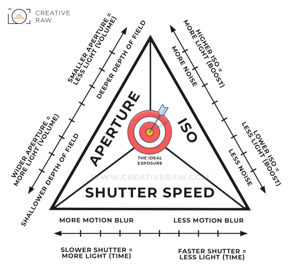
"Back in the film days," which is a good place to start...
To produce a consistent "middle grey tone" with a selected film stock then you must ensure that the same density is produced in the film in all situations. So you pointed you meter at your grey card and because it is calibrated for a grey card then it gave you the shutter and aperture settings to achieve that. That's the point of exposure, to make sure that the amount of light hitting the film (per unit area) remains constant in variable lighting conditions, you don't vary the exposure, you keep it constant while the light levels illuminating the subject vary.
ASA was nothing more than the calibration setting for the light meter and effectively controled the meter's sensitivity.
ASA was also supposed to be related to film speed where manufacurers would indicate the optimum setting for the camera's meter and an optimum development to go with that. However it turned out that "optimum" had some marketing connotations as well...
Skip to digital, and the point of exposure is the same, to ensure that a consistent amount of light falls on the sensor for each consistent output level. But the need to match that to a fixed reaction in a film stock is gone. Instead that's replaced with the output jpeg of the camera. So in effect, if you point your camera meter at your grey card then it will show you the aperture/shutter settings needed to reproduce that mid grey tone in the output jpeg for (effectively) whatever light meter calibration you've chosen. It's as good a way as any of thinking about it, you select a meter sensitivity and the camera automatically adjusts the brightness of the output jpeg so your exposure from you gery card reproduces a consitent mid grey tone in the output image.
Thing with digital though is that you can now work backwards. Instead of choosing a meter sensitivity that matches the film stock then "zero the meter" to indicate the settings required to give the set exposure level for mid grey, you can now choose the preferred settings and then "zero the meter" by changing it's sensitivity, essentiually choosing the amount of processing of the output jpeg calibrated around the brightness of your mid grey card.
The "Exposure Triange", to me, seems to be an attempt to produce an elegant and symmetrical overview simply because we desire and elegant and symmetrical overview. It draws connections where no real connections exists, misses the key variable, and seems to miss the key concept of exposure. It also seems to show that we are looking far too much at the camera and the camera alone.
It doesn't really make much sense.
For a start we are not trying to make an image lighter, we are trying to keep it consistent. We are trying to ensure that the output tone of our mid grey card photo remains constant in varying light conditions. We change aperture and shutter to ensure exposure remains constant. Exposure is not strictly speaking the aperture and shutter settings themselves, they are just a means of controlling exposure.
The variable in the equation (that's missing) is the level of illumination or level of light of the scene being photographed. Noise is related to total amount of light that hits the sensor during an exposure and it is far more useful if connected to scene illumination. There is no real direct connection between ISO and noise, ISO only really connects meter reading to output jpeg.
If you want a diagram then try the dial of a Weston Master V. The lower the number on the inner light dial the more noise you start with. If you press the little button (used to lock ISO setting) so the whole middle spins round and you can select your desired aperture/shutter settings while remembering that spinning clockwise increases noise (effectively reducing shutter for chosen aperture). Then the resultant ISO setting indicated by level of scene illumination combined with your preffered shutter/aperture setting indicates what you should set your ISO dial to to maintain your mid grey card in your output jpeg. It also relates to the brightness of the output raw file, though this is not strictly calibrated and isn't guaranteed.